Showing posts with label Style. Show all posts

Saturday, 13 February 2016

Patiala salwar

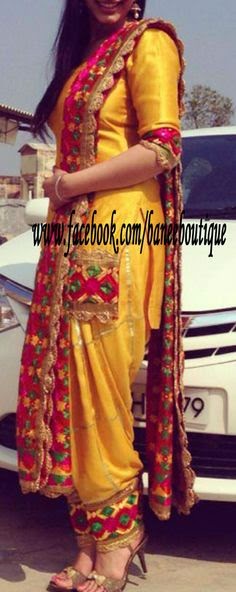
Patiala salwar (also called a pattian walee salwar) (It is also pronounced as Shalwar in Urdu) is a type of female trousers which has its roots in Patiala City in the Northern region of Punjab state in India. The King of Patiala in earlier times had its Royal dress as Patiala Salwar. The Patiala Salwar has a close resemblance to the pathani Suit which has similar loose lowers as salwars and long knee length top known as Kameez. Over the decade the dress now is not worn by men but has classically transformed itself with new cuts and styling into women's Patiala Salwar.
The reason why the patiala dress is preferred by most of the women of Punjab and other regions of Northern India is its comfortability and durability in summers. Since the patiala salwar is very loose and stitched with pleats its a very comfortable outfit to wear. Its distinguishing characteristic is folds of cloth stitched together that meet at the bottom. Patiala salwars require double the length of material to get stitched. The fall of the pleats of the PatialaSalwar is such that it gives a beautiful draping effect.
Patiala salwar with lots of pleats is also referred to as Patiala "Shahi" salwar since it was worn by the shahi (royal) people of Patiala city in state of Punjab. The Patiala salwar is worn as an alternative to the traditional punjabi salwar suit.


THANK YOU


ANEEZ CREATIONS


7589089000

PAJAMI SUIT

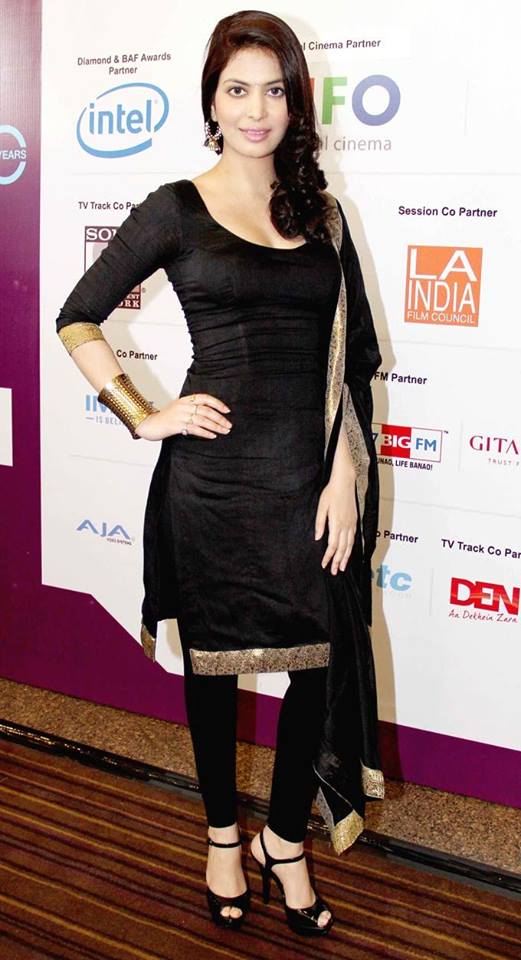
Churidars (Hindi: चुडीदार)(Urduچُوڑی دار‎), (Punjabiਚੂੜੀਦਾਰ), or more properly churidar pyjamas (ਚੂੜੀਦਾਰ ਪਜਾਮਾ), are tightly fitting trousers worn by both men and women in South Asia. Churidars are a variant of the common salwar pants. Salwars are cut wide at the top and narrow at the ankle. Churidars narrow more quickly, so that contours of the leg are revealed. They are usually cut on the bias, making them naturally stretchy. Stretch is important when pants are closefitting. They are also longer than the leg and sometimes finish with a tightly fitting buttoned cuff at the ankle. The excess length falls into folds and appears like a set of bangles resting on the ankle (hence 'churidar'  'churi': bangle, 'dar': like). When the wearer is sitting, the extra material is the "ease" that makes it possible to bend the legs and sit comfortably. The word churidar is from Hindi and made its way into English only in the 20th century. Earlier, tight fitting churidar-like pants worn in India were referred to by the British as Moghul breecheslong-drawers, or mosquito drawers. 
The churidar is usually worn with a Kameez (tunic) by women or a Kurta (a loose overshirt) by men, or they can form part of a bodice and skirt ensemble. if you buy these suit contect us. and visit our page(aneez creations)...


                                        THANK YOU 


                  ANEEZ CREATIONS


                  7589089000

Thursday, 26 November 2015

DRESS FROCK GOWN

dress (also known as a FROCK or a GOWN) is a garment consisting of a SKIRT with an attached BODICE (or a matching bodice giving the effect of a one-piece garment). In Western culture dresses are more often worn by woman  and girls.
The hemlines of dresses vary depending on the whims of  and the modesty or personal taste of the wearer.


      ANEEZ CREATIONS


      7589089000

BRIDLE LEHNGA

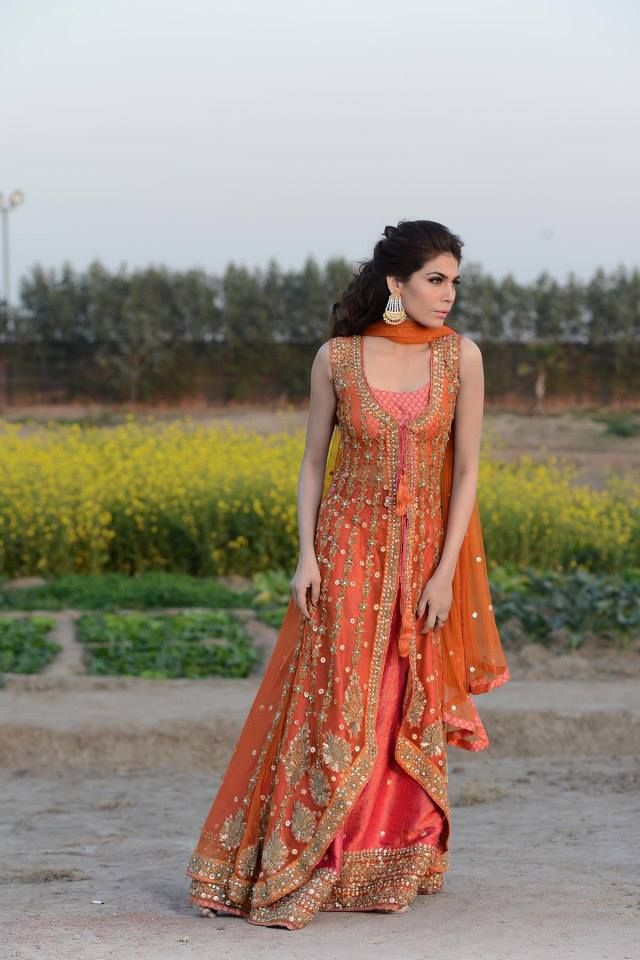
In India, the wedding rituals and clothes make the wedding as much as that of the bride and her groom. Both look their splendid best in gorgeous clothes. Not just the couple, but the guests attending the family and the relatives are often seen dressed up to the teeth. The bride is dressed up in auspicious colors, whereas the bridegroom is dressed to exude a regale aura. The brides maid and best men are often dressed in par with the bride and the groom. But they are toned down a bit because the day belongs to the couple. All the folks attending the marriage are decked up with gold jewelry including the bride and sometimes the groom. The ladies are additionally adorned with henna patterns all over their palms, hands, forearms, legs and feet. Sometimes henna patterns are replaced with alta designs which are short lived and easily removable.
Indian weddings generally tend to continue for several days and new attire is worn each day. All these dresses and the color symbolize the meaning of marriage and the period that follows it. Indian wedding is one that gives more importance to details like different rituals and the various attires one wears to attend them.
Indian hindu wedding continue for several days. India is a country that defines diversity and this is visible even in the wedding and its different styles. The ceremonies, the rituals, the formalities are all different between each region and culture. Unlike the Christians, Hindus wedding ceremony does not resemble the western marriages and are quite elaborate. In the North,Starting from the tilak ceremony, each function has significance in the marriage. Tilak, sangeet, haldi, bharat and the shaddi all necessitate the Bride and the bridegroom to wear new attire at each occasion.All these above ceremonies are known by different names in the other parts. 


    ANEEZ CREATIONS 


     7589089000

Wednesday, 7 January 2015

patiala suits

Patiala salwar (also called a pattian walee salwar) (Its also pronounced as Shalwar in Urdu) is a type of female Traouser which has its roots in Patiala City in the Northern region of Punjab state in India. The King of Patiala in earlier times had its Royal dress as Patiala Salwar. The Patiala Salwar has a close resemblance to the pathani Suit which has similar loose lowers as salwars and long knee length top known as Kameez. Over the decade the dress now is not worn by men but has classically transformed itself with new cuts and styling into women's Patiala Salwar.
The reason why the patiala dress is preferred by most of the women of Punjab and other regions of Northern India is its comfortability and durability in summers. Since the patiala salwar is very loose and stitched with Pleats its a very comfortable outfit to wear. Its distinguishing characteristic is folds of cloth stitched together that meet at the bottom. Patiala salwars require double the length of material to get stitched. The fall of the pleats of the PatialaSalwar is such that it gives a beautiful draping effect.
Patiala salwar with lots of pleats is also referred to as Patiala "Shahi" salwar since it was worn by the shahi (royal) people of Patiala city in state of Punjab. The Patiala salwar is worn as an alternative to the traditional Punjabi salwar suits.


Contect no. 9803230839


Thank you                      


Aneez Creations            


Wednesday, 31 December 2014

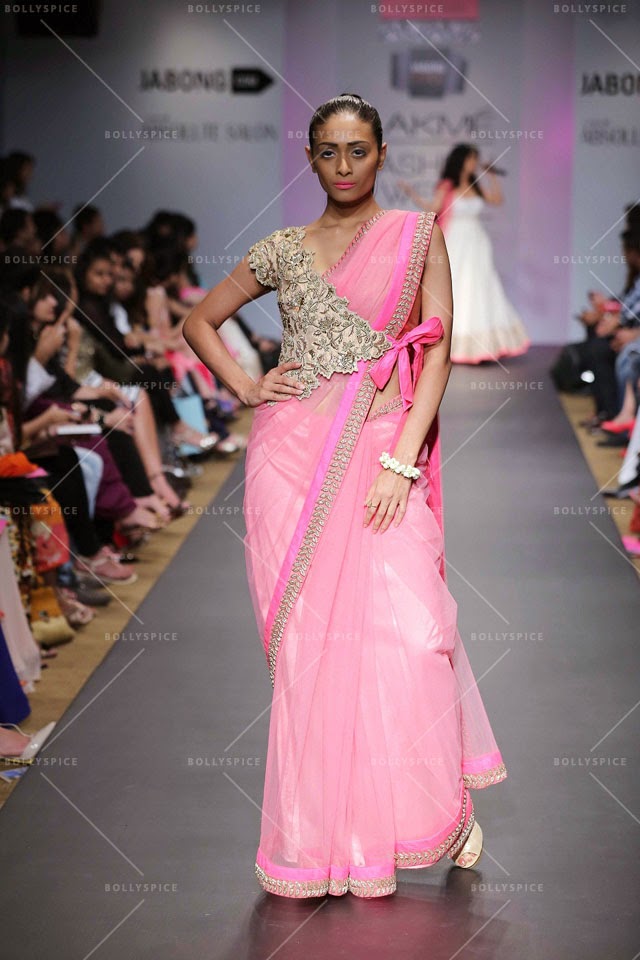
Saree, Sari

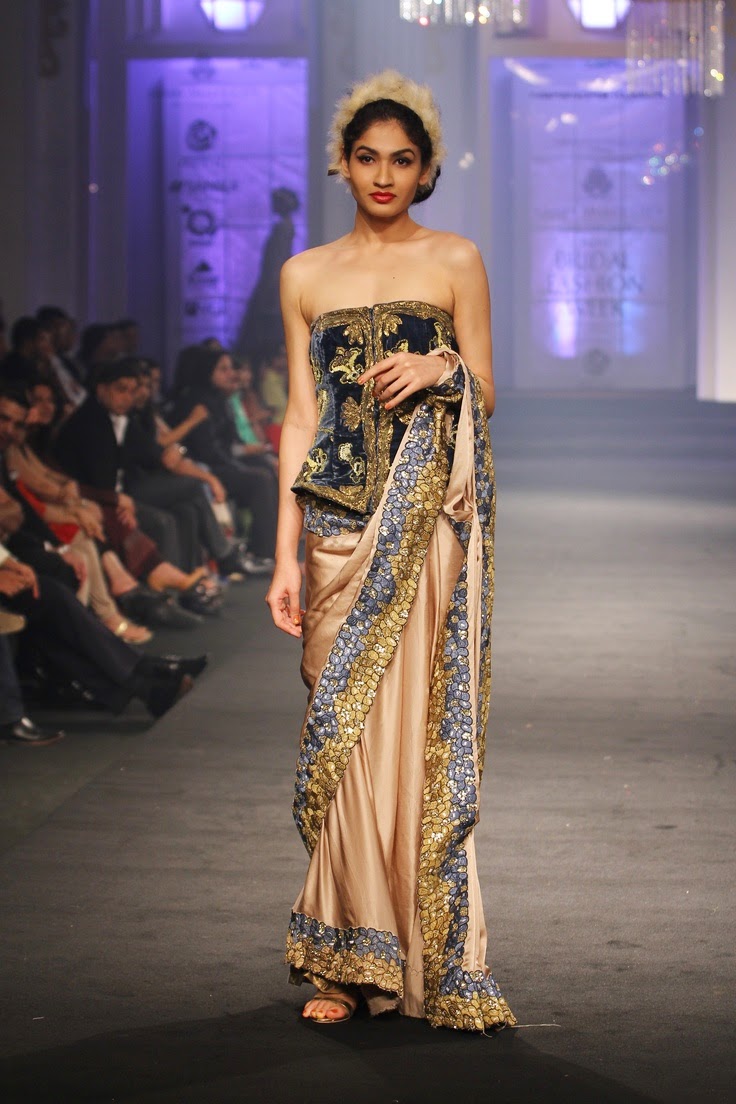
sarisaree or shari is a South Asian female garment that consists of a drape varying from five to nine yards (4.57meters to 8.23meters) in length  and two to four feet (60cm to 1.20m) in breadth that is typically wrapped around the waist, with one end draped over the shoulder, baring themidriff.
The sari is usually worn over a Petticoat (called 'parkar' (परकर) in marathi lahaṅgā or Lehnga in the north; pavadai in Tamil, pavada (or occasionallylanga) in Telugu, chaniyoparkarghaghra, or ghagaro in the west; and shaya in eastern India), with a fitted upper garment commonly called a blouse (ravika in the south and choli elsewhere). The blouse has short sleeves and is usually cropped at the midriff. The sari is associated with grace and is widely regarded as a symbol of IndianPakistani, NepleaseBangladeshi and Sri Lankan culture
Saris are woven with one plain end (the end that is concealed inside the wrap), two long decorative borders running the length of the sari, and a one to three-foot section at the other end which continues and elaborates the length-wise decoration. This end is called the pallu; it is the part thrown over the shoulder in the nivi style of draping.
In past times, saris were woven of Silk or cotton. The rich could afford finely woven, Dipanouse silk saris that, according to Folklore could be passed through a Finger The poor wore coarsely woven cotton saris. All saris were Handwoven and represented a considerable investment of time or money.
Simple hand-woven villagers' saris are often decorated with checks or stripes woven into the cloth. Inexpensive saris were also decorated with Block Printing using carved wooden blocks and vegetable dyes, or Tie-dying, known in India as bhandani work. contect us and visit our page (aneez creation ).....


Contect no.- 9803230839


Thank You                     


Aneez Creations