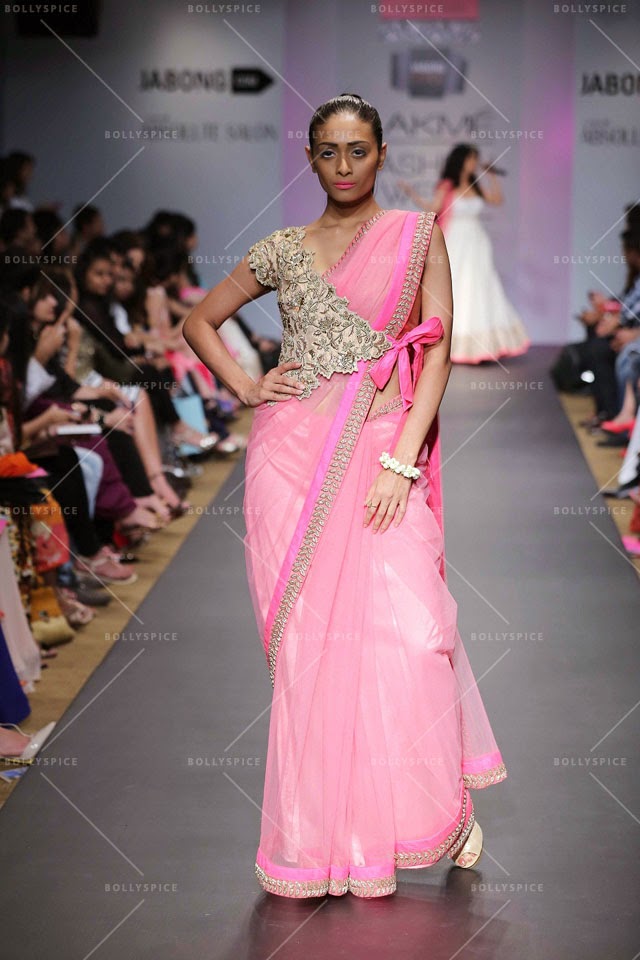
A sari, saree or shari is a South Asian female garment that consists of a drape varying from five to nine yards (4.57meters to 8.23meters) in length and two to four feet (60cm to 1.20m) in breadth that is typically wrapped around the waist, with one end draped over the shoulder, baring themidriff.
The sari is usually worn over a Petticoat (called 'parkar' (परकर) in marathi lahaṅgā or Lehnga in the north; pavadai in Tamil, pavada (or occasionallylanga) in Telugu, chaniyo, parkar, ghaghra, or ghagaro in the west; and shaya in eastern India), with a fitted upper garment commonly called a blouse (ravika in the south and choli elsewhere). The blouse has short sleeves and is usually cropped at the midriff. The sari is associated with grace and is widely regarded as a symbol of Indian, Pakistani, Neplease, Bangladeshi and Sri Lankan culture
Saris are woven with one plain end (the end that is concealed inside the wrap), two long decorative borders running the length of the sari, and a one to three-foot section at the other end which continues and elaborates the length-wise decoration. This end is called the pallu; it is the part thrown over the shoulder in the nivi style of draping.
In past times, saris were woven of Silk or cotton. The rich could afford finely woven, Dipanouse silk saris that, according to Folklore could be passed through a Finger The poor wore coarsely woven cotton saris. All saris were Handwoven and represented a considerable investment of time or money.
Simple hand-woven villagers' saris are often decorated with checks or stripes woven into the cloth. Inexpensive saris were also decorated with Block Printing using carved wooden blocks and vegetable dyes, or Tie-dying, known in India as bhandani work. contect us and visit our page (aneez creation ).....
Contect no.- 9803230839
Thank You
Aneez Creations